
MORNINGSIDE KIDS

Morningside Kids 6/11/23 Ezra

EZRA READ THE LAW (EZRA 7-10, NEHEMIAH 8)
Find 1 John 1:9 in your Bible and read it slowly two or three times. Many Christians are familiar with these words; perhaps you have them memorized. We agree that God wants us to confess our sins to Him. We believe that God is faithful to forgive His children by the blood of Jesus. But do you find it easy to confess your sin to God? If not, why? Do you believe the lie that keeping quiet about our sin will prevent God from knowing about it?
In Ezra 9, leaders approached Ezra and declared to him the grim reality of the people of Israel who were caught up in devious behavior and lifestyles. Following the second return of exiles to Jerusalem, the men of Israel began to intermarry with foreign women again. It was as if they had completely forgotten God. Ezra’s response of honest confession before a holy God ought to teach us something about his character and about our need to do likewise.
First, Ezra stood before God and the faithful of Israel, and he cried out before the Lord. Ezra didn’t point fingers as he went before God. He didn’t shift the blame or use the chance to gossip about others in his community. Ezra did precisely what we see later recorded in 1 John 1:9: he confessed his sin to God.
Ezra truly believed that it was right to bring his sin and the sin of his community before God, to lay it all out before the Lord and to seek God’s forgiveness by faith and repentance. And not only did Ezra see the good of confession, he found reason to celebrate as he did.
Read Ezra 9:13. Ezra recognized the necessity of confession and then celebrated that God’s grace was still enough, still active, and still effective toward His people.
Ezra took his sin seriously and confessed it before a holy God. And Ezra confessed with hope that the God he had sinned against, had been gracious and would continue to be so.
When we bring our sin before God, let us do so with humility rooted in our deep need for God and confidence grounded in our understanding of His amazing grace.


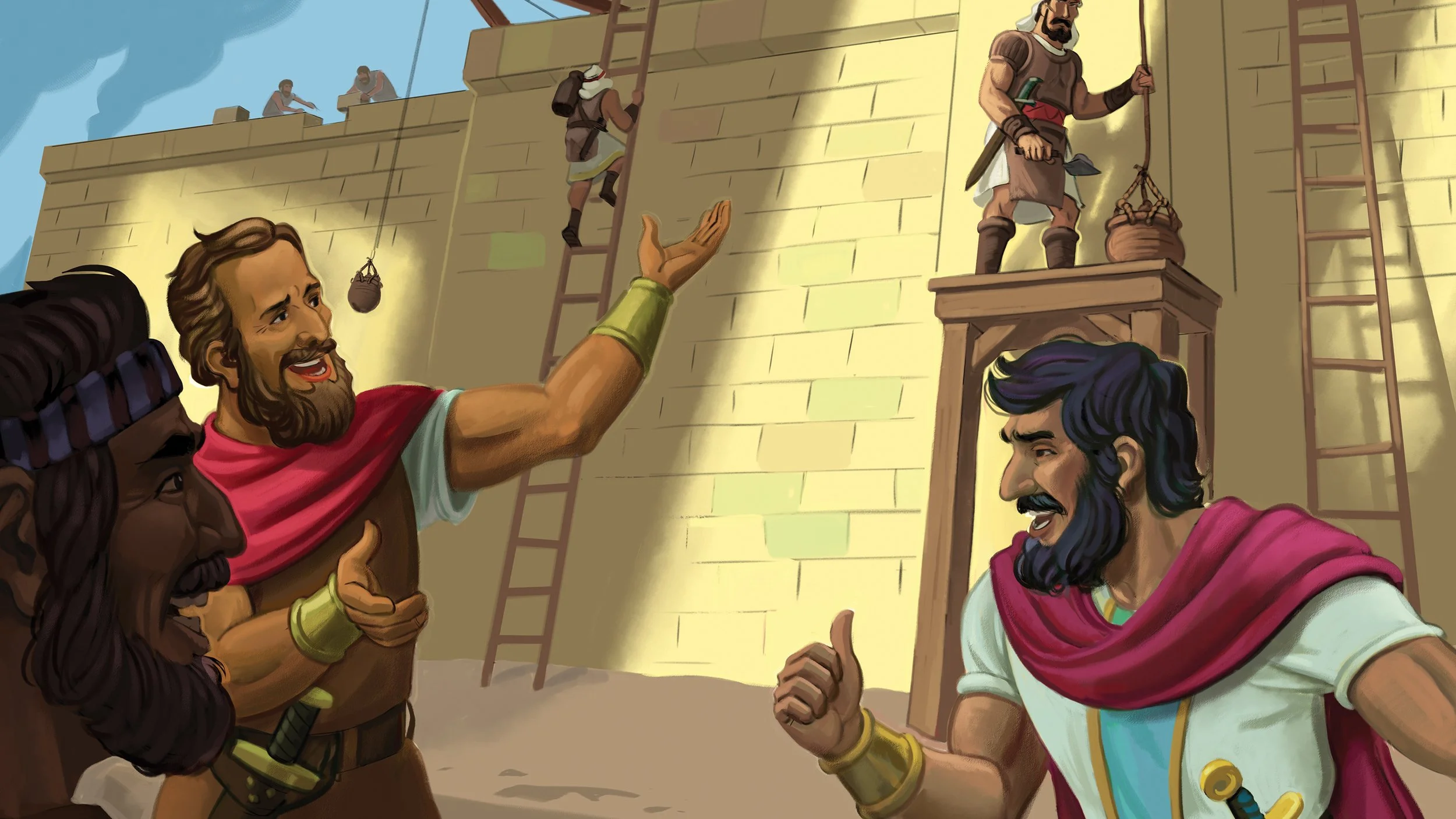
Morningside Kids 6/4/23 - Nehemiah Rebuilt the Walls

NEHEMIAH REBUILT THE WALLS (NEHEMIAH 1-7)
Recall the last time you were faced with devastating news or found yourself filled with angst, worry, or fear. How did you respond?
Anger and bitterness are common reactions to bad news. We may feel tempted to isolate ourselves from others. Grief is complex, and responses vary greatly. However, according to the Bible, Nehemiah’s response is the best response.
Read about Nehemiah’s general response in Nehemiah 1:4. Then in Nehemiah 1:5-11, we discover the specific way that Nehemiah prayed in response to this devastating news. He recognized God’s faithfulness, requested God’s ear, confessed sin, and committed his people to the Lord’s care.
Nehemiah began his prayer with a recognition of the faithfulness of God. He indicated his confidence that God had been and would continue to be faithful. He then requested God’s ear. Though Nehemiah was confident that God heard him, he opened and closed his prayer of dependence by begging God to listen to his request.
Why did Nehemiah pray this way? Likely, he was further demonstrating his deep conviction that God and God alone is able to work in such a way that would bring about restoration.
Nehemiah’s prayer also demonstrates his belief that sin has serious consequences. He confessed his own sin and the sin of his family, recognizing that God was fully aware of their sin, but also that this sin was not to be taken lightly and needed to be dealt with.
Finally, he committed his family—the Jewish people—into the hands of this faithful and just God. He trusted God to be faithful to His word and His people. Though Nehemiah didn’t know what the outcome would be, he was confident in his God, that He would remain faithful no matter what.
Nehemiah’s response demonstrated a deep love, trust, and confidence in God that is exemplary for each of us. When we face moments of devastation, we can—with deep dependence—turn to God and find comfort.


Preschool Summer Lesson Schedule

PRESCHOOL summer LESSON SCHEDULE
In our Sunday morning preschool ministry our curriculum starts with basics. We strive to build a biblical foundation of helping the children begin to understand there is one true God who came to earth in the person of Jesus Christ to show us His love for us. We want the children to have a basic knowledge that will one day lead to a personal relationship with Jesus Christ. We also strive to teach a proper response to God in our personal relationship to Him and in our relationship to others.
Summer: The one true God is introduced: who He is, what He does for us, and how we are to respond to Him as seen mainly in the lives of Old Testament individuals.
Week 1 - June 4: Baby Moses/Burning Bush
Week 2 - June 11: God Punishes Egypt
Week 3 - June 18: Red Sea Crossing
Week 4 - June 25: Water From a Rock
Week 5 - July 2: 10 Commandments
Week 6 - July 9: Joshua and the Battle of Jericho
Week 7 - July 16: Gideon
Week 8 - July 23: David & Goliath
Week 9 - July 30: Elijah’s Reminder to Israel
Week 10 - August 6: Naaman
Week 11 - August 13: Shadrach, Meeshach & Abednego
Week 12 - August 20: Esther
Week 13 - August 27: Widow’s Mite

Morningside Kids 5/28/23 - Esther Saved Her People

ESTHER SAVED HER PEOPLE (ESTHER)
You may never have said it aloud before, but there is a good chance that you have thought it: “If I just had ________ [fill in the blank with your greatest desire], then following Jesus would be so much easier.” What is your greatest desire? For some it may be money; for others, possessions; for others, power or a relationship or a feeling.
We live in a broken world and may often fantasize about what life would be like if our ideals came to pass. We may even hurt or mistreat others in pursuit of our dreams—to gain that which we believe has the greatest importance. But the reality is that even if we have all that we want, there is still a great temptation to desire more and continue seeking our own good at the expense of others.
This sinful reality is part of what makes the events in the Book of Esther so surprising. We observe Mordecai’s journey from faithful adoptive father of a young girl in a foreign land to his becoming the king’s right-hand man.
Mordecai was faithful. He was faithful to take in Esther, his cousin who was without father or mother. He was faithful to sit, wait, and watch every day at the gate of the king’s palace to see what God would do through this beautiful young woman. He was faithful to speak up with boldness and confidence, even at the threat of death. And he was faithful to lead beside the king in an honorable way seeking the flourishing of the kingdom.
Mordecai rose to a position of great power and authority. Many figures in power tend to forget their roots, turning to selfishness and unfaithfulness. Mordecai, however, did not. Read Esther 10:3.
In our temptation to seek our own pleasure, we must remember that our Savior, Jesus Christ, “did not come to be served, but to serve, and to give his life as a ransom for many” (Mark 10:45). In remembering the work of Christ, we find not only an example to follow but also the power to do the same.
Christ in us seeks the good of those around us. No matter how high or low our rank in the world, He is always good and always desires that we seek the good of those around us, for His glory.



Morningside Kids 5/21/23 - God Can Always Be Trusted
GOD CAN ALWAYS BE TRUSTED (Jeremiah 31)
If you’re a parent or a spouse, there’s a strong likelihood that at some point you have had to say the same thing to the same person over and over to get your point across. Some things are so important they are worth repeating. And some people are so quick to forget, we must repeat.
For example, each of my four children have gone through seasons when brushing their teeth was such a chore that you would have thought they were being asked to eat nails. My wife and I would remind them dozens of times in the morning and dozens of times in the evening to brush their teeth, and yet still we would later find evidence that it didn’t happen. I feel confident none of them were belligerent in wanting their teeth to rot, but we were loving enough to remind them that this was likely to happen if they didn’t remember to complete this menial task a couple of times a day.
In Jeremiah 31, there is a phrase that is repeated by the Lord to the hearer of these words. The phrase, “the LORD’s declaration” occurs 10 times in these 40 verses. These words even appear at times in the middle of a thought or sentence, uniquely placed to garner great attention. In addition the phrase, “This is what the Lord says” occurs seven times. Clearly, the Lord wants the hearers to be abundantly clear from whom these words are coming.
We are most certainly forgetful people, often forgetting the smallest of details and even the most significant of facts. The Lord knows us on the deepest level and knows how great our need is for direct reminders.
Jeremiah 31 contains difficult truths and delightful promises. God knows that the hearer is likely to bristle at the warnings and rejoice in the hope, but he also seemingly wants to ensure that we who read these words do not forget that they are His words.
As we read the Bible, it is crucial that we recall the voice behind the words: the voice of God. The only One of highest authority and knowledge and good. Maybe you need to remember as you read and listen to God’s Word that this is the Lord’s declaration.


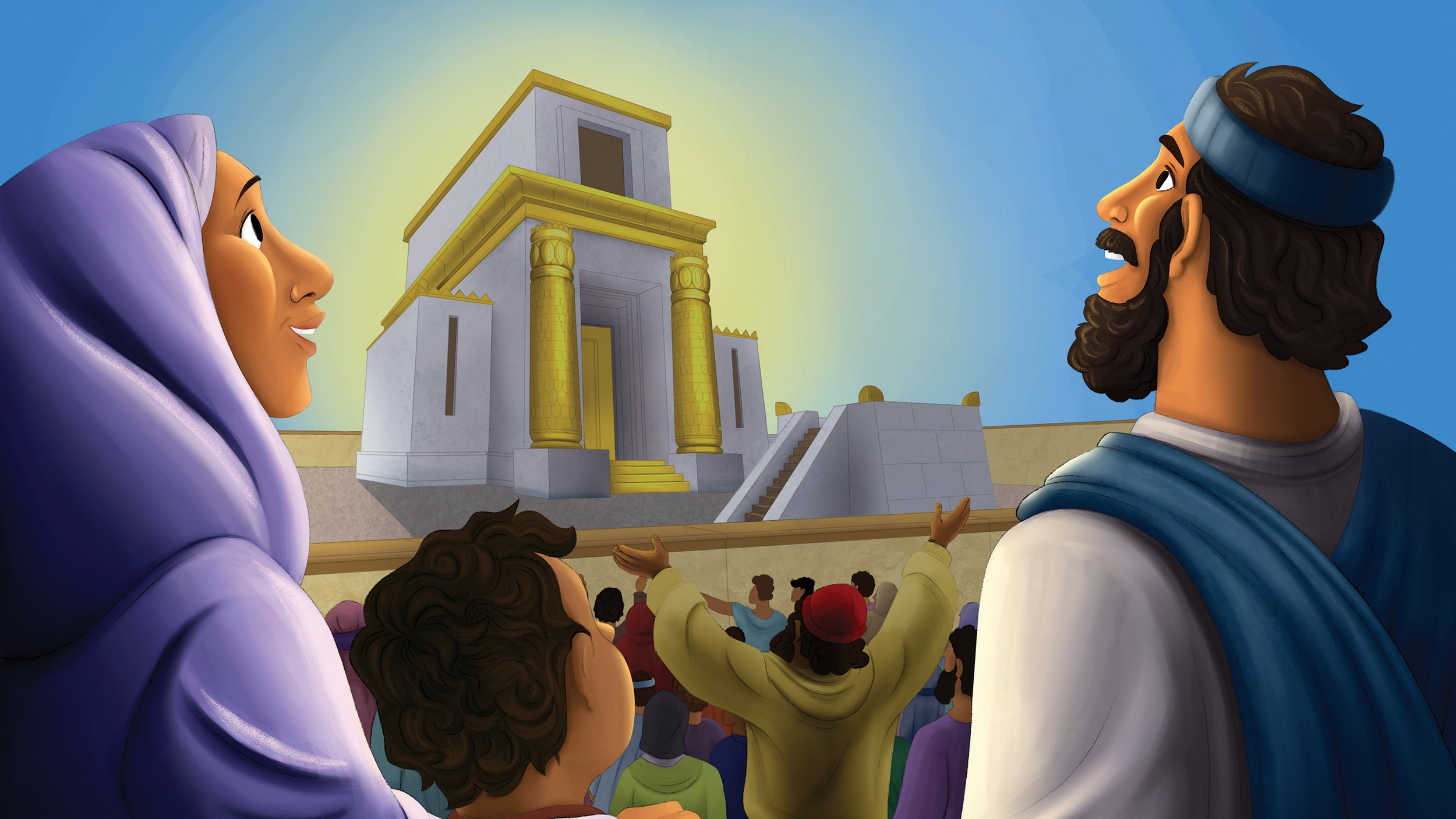
Morningside Kids 5/14/23 - The People Rebuilt the Temple

The People Rebuilt the Temple (Ezra 2–6)
Imagine this for a moment: It’s late Saturday night, and you’ve been out of the house all day. You’ve gone from place to place with more to do than seemed possible when you looked at all of it on the calendar. You’ve just returned home and sat down for dinner. Suddenly you remember that tomorrow is Sunday. You quickly recall that you are scheduled to serve with preschoolers tomorrow morning, your small group is having lunch together after church, and you are yet to plan out this upcoming week—which is just as packed as your weekend has been. The thought crosses your mind, What if I just sat this one out tomorrow?
Does this scenario hit close to home?
In Ezra 3, as the work had begun to rebuild the temple, there was an eager desire among God’s people, leading them to anticipate what that place would afford them upon its completion. As the people worked and waited, even in the midst of their exhaustion, they made time to worship.
Read Ezra 3:6. Not only was the temple incomplete, but the first stage of the build was not yet done. Still, the laborers did not forget or fail to keep the purpose in front. The goal was not the temple; it was the Lord.
We often find ourselves in scenarios like the one above, ready to make excuses to not do the things that matter most because we’ve misplaced our priorities—or at least lost sight of them in the whirlwind of life. Our decisions reflect what has the seat of greatest importance in our lives.
Hebrews 10:24-25 says, “And let us consider one another in order to provoke love and good works, not neglecting to gather together, as some are in the habit of doing, but encouraging each other, and all the more as you see the day approaching.”
Understanding Christ to be our greatest purpose and prize ought to direct our paths toward prioritizing our lives around Christ and His church. Not only will this be good for us, but it will be good for the rest of God’s children as well. When we are eager to be with the Lord and His people, not only will we be productive, but we will be truly satisfied.



Morningside Kids 5/7/23 - Zechariah Gave Hope

Peace and security are words often heard in the whirlwind of our news cycles. They are used as ideas or desires that require work to achieve. They are used in the negative sense of not being a current reality. They are used as the aim, answer, or solution to the world’s problems.
Though the idea of peace and security are not foreign to our vernacular, they are most certainly foreign to much of our world’s reality. It is hard to find a pocket of the earth that might be described with these terms. Rather, what is most found is chaos and fear.
When we understand the true impact of sin on the world, this comes as no surprise. It’s not shocking to see the news of war and violence. It does not bring amazement to hear of murder and strife. There is no astonishment at the experience of disappointment or pain. Because we know that we live in a world riddled with sin and its implications.
Read the words of Zechariah 14:11. What comes to mind? “People will live there, and never again will there be a curse of complete destruction. So Jerusalem will dwell in security.”
Are you struck by the thought of such a place that could be described as secure? Are you left longing for that to be your reality? Are you doubtful that this could ever be a reality?
Ultimately, this is a promise that is sure to happen. This promise is reiterated in Deuteronomy 7:7-9:
“The LORD had his heart set on you and chose you, not because you were more numerous than all peoples, for you were the fewest of all peoples. But because the LORD loved you and kept the oath he swore to your ancestors, he brought you out with a strong hand and redeemed you from the place of slavery, from the power of Pharaoh king of Egypt. Know that the LORD your God is God, the faithful God who keeps his gracious covenant loyalty for a thousand generations with those who love him and keep his commands.”
This promise was for God’s people then, and it is for all who follow Jesus today as well. This peace and security is ours in Christ. As sure as Christ has come, lived, died, and risen, so can we find rest that this promise is true and this day will come.



Morningside Kids 4/30/23 - God Delivered His People

GOD DELIVERED HIS PEOPLE (EZRA 1)
Rest. It’s a word that conjures up different thoughts in different people from different circumstances. For some, rest brings to mind a desire to momentarily break from the chaos of life to sleep, relax, and even recover. For others, rest is an unrealistic hope as they navigate a non-stop schedule of busyness. Yet for others, the word rest suggests an uneventful, quiet life of the mundane.
Whether it’s a nap, a vacation, or boredom that comes to mind when you think of rest, it is likely a word that triggers some desire or response. And almost universally, the thought of rest is primarily physical.
The Bible teaches that rhythms of rest are good and even necessary for us; however, the Bible’s primary teaching on rest refers to the spiritual. In Ezra 1, God’s remnant is instructed to recover from their exile with … work.
This work would be costly, demanding, and long; but this work actually aimed to bring rest. How could this be so? Because their work was to build the place where they would encounter the living God, the One who gives true rest to the soul.
In Matthew 11:28-30, Jesus said, “Come to me, all of you who are weary and burdened, and I will give you rest. Take up my yoke and learn from me, because I am lowly and humble in heart, and you will find rest for your souls. For my yoke is easy and my burden is light.”
Though God clearly teaches us the benefits of a rhythm of physical rest—Sabbath—He ultimately uses physical rest to teach us of our need for a greater spiritual rest—a rest for our soul, a rest that comes in understanding that we cannot save ourselves, but God has done everything necessary through Christ to save us. We are invited into this rest through the substitutionary atonement of Jesus.
The people of God are instructed in Ezra 1 to begin the arduous work of building God’s dwelling place. But this work would ultimately lead to their place of rest—in God’s presence.
We too may find ourselves physically exhausted from the demanding work of faithfully following the Lord in the context He has placed us. But take heart, there is rest for your soul in the presence of God and the person of Christ.


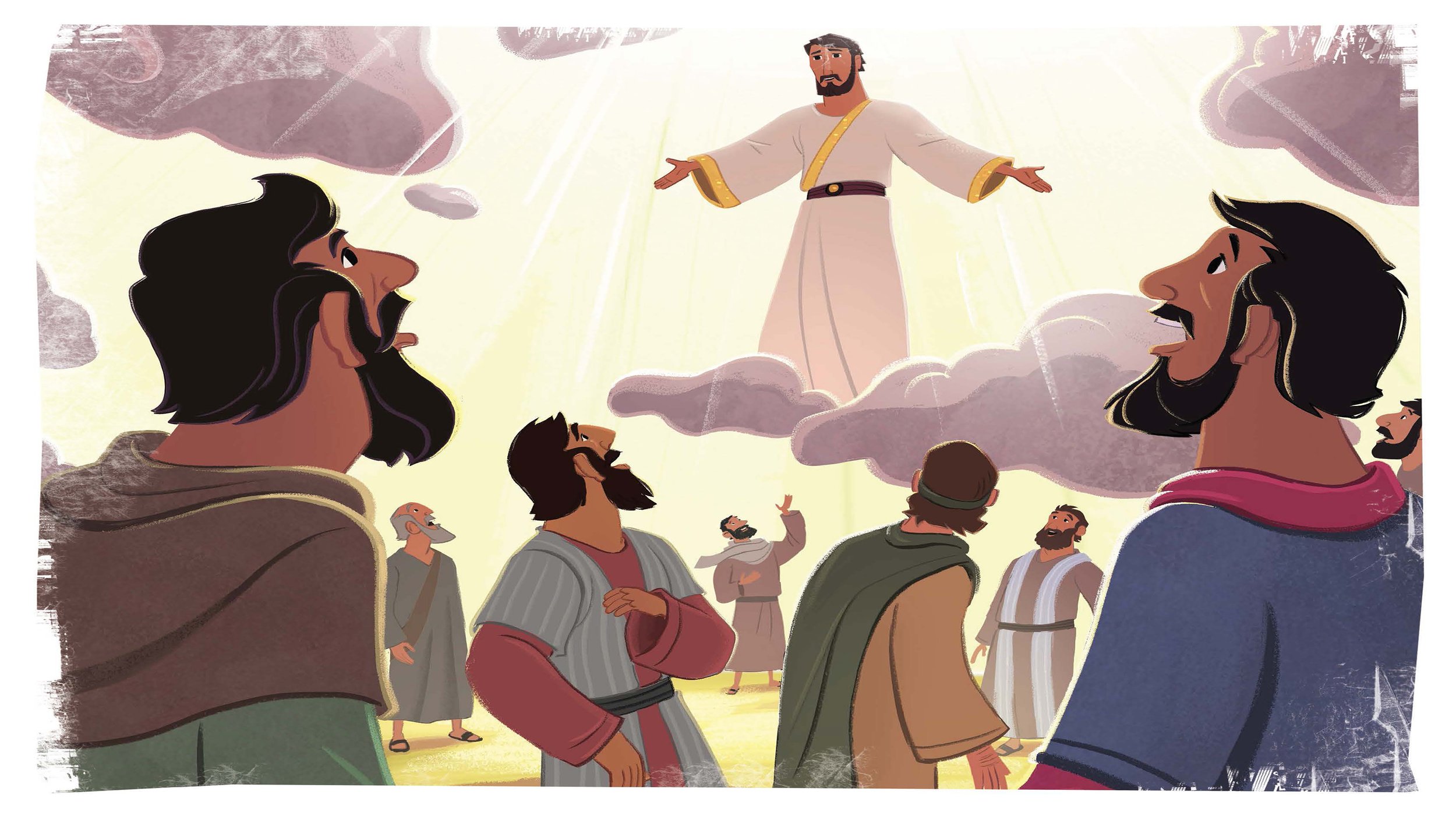
Morningside Kids 4/23/23 - Jesus Returned to Heaven

JESUS RETURNED TO HEAVEN
After Jesus’ death and resurrection, He appeared to His disciples over a 40-day period. At one point, He appeared to more than 500 people. During that time, Jesus taught about the kingdom of God. Some of them wondered if Jesus was finally going to overthrow the Roman government and set up His kingdom on earth.
Jesus had a different plan for the disciples. He directed the Eleven to go to a mountain, where He appeared to them again. They worshiped Him, but some still doubted. (Matt. 28:17) On the mountain, Jesus gave His disciples the Great Commission. He commanded His disciples to go into the world and preach the gospel, the good news about Him.
The Great Commission is not just for missionaries far from home. All believers are called to share the gospel with others, teach them to obey God’s commands, and baptize them in the name of the Father, Son, and Holy Spirit. Jesus finished His commission with a profound promise: “And remember, I am with you always, to the end of the age” (Matt. 28:20).
Jesus told the disciples to remain in Jerusalem until they received the Father’s promise—the Holy Spirit. Those who repented of their sins and trusted in Jesus’ death and resurrection would be baptized by the Holy Spirit. The Holy Spirit would give them power to live holy lives and take the gospel to the ends of the earth. After Jesus told the disciples these things, Jesus was taken up into the sky—right in front of their eyes!
Jesus left earth and returned to heaven, but He did not leave us alone. Jesus promised to send the Holy Spirit to be with us and help us do God’s work—to teach people everywhere about Jesus so they will trust in Him as their Lord and Savior. One day, Jesus will return to make all things new and to rule as Lord over all.
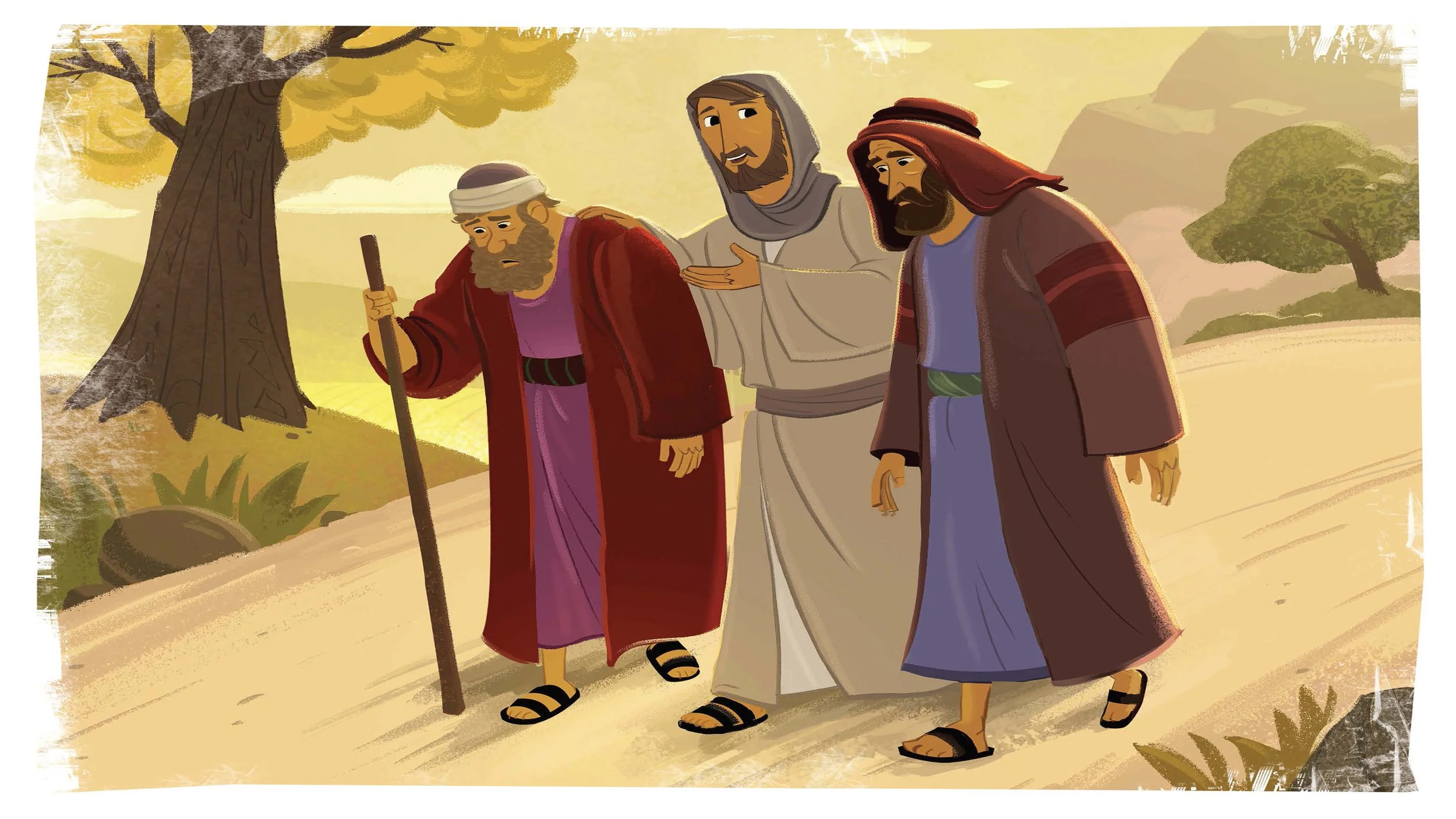
Morningside Kids 4/16/23 - The Emmaus Disciples
The Emmaus Disciples
Jesus’ death and resurrection should not have surprised the disciples. Sometimes Jesus spoke metaphorically about His death and resurrection. (See Matt. 12:39; Mark 14:58; John 2:19; 3:14-15.) Other times, Jesus plainly told the disciples that He would be betrayed, crucified, buried, and resurrected on the third day. (Matt. 17:12; Mark 8:31; Luke 9:22) In fact, Jesus had spoken so frequently of His death and resurrection, the chief priests and Pharisees asked Pilate to place guards at the tomb in case the disciples stole Jesus’ body. (See Matt. 27:62-66.)
On resurrection morning, the angel at Jesus’ tomb asked the women, “Why are you looking for the living among the dead?” (Luke 24:5). Even when Peter and John ran to the empty tomb to see it for themselves, Peter was amazed but uncertain (Luke 24:12), while John believed (John 20:8).
That same day, two disciples were walking to Emmaus, arguing about recent events. Jesus began walking next to them, but God prevented them from recognizing Jesus. (Luke 24:16) Jesus simply asked them what they were arguing about. They stopped walking. How could He not have heard about what happened over the last three days?
The two disciples had hoped Jesus was the Redeemer of Israel. Their hopes were crushed when Jesus died. Now Jesus explained to them why the Messiah had to die, starting with Moses and the Prophets. Jesus showed how the Scriptures point to Him. (Luke 24:27; John 5:39)
Remind kids that the Bible is not a collection of unrelated stories. The whole Bible is about Jesus. When Adam and Eve sinned, God began working out His plan to send Jesus to rescue people from sin. All of the Old Testament points forward to Jesus’ life, death, and resurrection—the time when Jesus would bring God’s promised salvation for sinners.

Morningside Kids 3/26/23 - God is Present With Us
GOD IS PRESENT WITH US (ISAIAH 7)
Have you ever heard someone say something along the lines of, “God’s promise of the future should give you hope today”? Maybe you’ve heard it dozens of times or said it just as many. In part, this saying stands because we believe the Bible teaches this principle; however, at the gut level, this idea can be challenging to hear and believe.
In Isaiah 7, God reminded Ahaz through the prophet Isaiah that he had ample reason to trust God. The evidence? A future promise. In a moment where it would have made sense to the human mind to reference a past experience or previous fulfillment, God chose to offer hope with a word about something that had not yet happened.
That future promise was the incarnation of Jesus Christ. God promised Christmas would come in order to encourage Ahaz to trust the Lord in that moment.
In hindsight, it is easy for us to read this and understand that God was forecasting a promise that we know He would ultimately keep. However, at the moment, this must have been perplexing to hear.
When we make our way through the New Testament and discover some of the beautiful and hopeful promises of the second return of Christ, the eternal joy of God’s people, and the faithfulness of God through trial and tribulation, we too might be tempted to wonder if it will actually happen.
Numbers 23:19 says, “God is not a man, that he might lie, or a son of man, that he might change his mind. Does he speak and not act, or promise and not fulfill?” God is faithful. We can look to the past and find a record of this truth, which means we can look to the future with continued confidence. God is not a liar.
Though not overt, our faithlessness in the face of His future promises suggest that we at least think there may be a chance that He is not always true to His Word and faithful to fulfill His promises. Yet He will not waver, and we can set our faith in that.
Yes, be thankful for God’s faithfulness in the past, but also be confident in His future promises. God is present with us. He will not change His mind, His character, or His Word.



Morningside Kids 3/19/23 - Daniel Served God

DANIEL SERVED GOD (DANIEL 5)
Daniel 5 contains several notable instances that are reasons to stop, pray, and consider our own lives. One of the most perplexing questions is derived from the words of the queen who entered the scene following Belshazzar’s inability to make sense of the writing inscribed on the wall by an unfamiliar hand.
Following the mysterious inscription, the king called in those who would have been culturally identified as experts at explaining and creating the unseen. To Belshazzar’s disappointment, none of them could explain the inscription or its meaning.
Then the queen stepped in with a brilliant thought, derived from past experiences. She recommended Daniel, a man who formerly had profound influence and insight and provided this type of help to the previous king—Belshazzar’s own relative, Nebuchadnezzar.
Consider the personal challenge that arises at the mention of Daniel’s name. It was Daniel’s past faithfulness that opened the door for present opportunity. And the natural question that flows from this realization is this: Does my faithfulness today lay the groundwork for future opportunities?
In Matthew 5:13-16, Jesus described His followers as the “salt of the earth” and the “light of the world.” These descriptions of the people of God lend themselves to cultural influence that shows the power, mercy, grace, and goodness of God. And this type of influence always leaves a mark. In Daniel’s case, the mark was so significant that gave greater influence to his witness.
We can’t undo the past, but we can be decisively committed to the next step, the next moment, and the next opportunity. What if you committed to faithfulness one day at a time? And what if your faithfulness marked the people around you in significant ways? Then I would imagine that your faithfulness will lead to future opportunities for greater influence.
Don’t waste today. Be faithful to your purpose to live as the salt of the earth and the light of the world. And God will use you today and, Lord willing, multiply your efforts and opportunities tomorrow.



Morningside Kids 3/12/23 - Daniel Was Faithful

I’m sure you’ve been there: That moment of decision when you weigh the risk versus the reward or the cost versus the benefit to determine what you will do.
These moments may come in regard to something simple like whether to eat one more helping of mashed potatoes, if it is worth it to take a detour to try and avoid traffic on your way to the grocery store, or if it is the right time to buy that new pair of shoes.
We may also face moments of discernment on much more significant questions: Do you take the new job opportunity that would relocate you and your family? Should you laugh at a colleague’s derogatory joke? Should you obey God even if it is costly or uncommon among the culture?
These major points of decision require a degree of confidence and conviction. The question is not if we have confidence or conviction, but what our confidence is in and where our conviction comes from.
In Daniel 1, Daniel has a deep confidence in the Lord and a conviction derived from the same. Psalm 71:4-5 models the pattern that I imagine Daniel progressed through in determining what to do in this moment of decision: “Deliver me, my God, from the power of the wicked, from the grasp of the unjust and oppressive. For you are my hope, Lord GOD, my confidence from my youth.”
The psalmist displays a deep confidence in the Lord to rescue and a deep conviction to remain hopeful and faithful. This confidence and conviction propel him toward a God-honoring response to his circumstances and direction in his decision making.
May this be our mode of decision making as well in all things, where our confidence in the Lord propels us forward and our conviction from the Lord steers our direction for His glory and our joy



Morningside Kids 3/5/23 - Jeremiah Encouraged God's People

JEREMIAH ENCOURAGED GOD’S PEOPLE (JEREMIAH 29-30)
God’s Word is living, active, sharp, powerful, and profitable. (Heb. 4:12; 2 Tim. 3:16-17) The Bible indicates that by the power of the Holy Spirit, God’s words teach, rebuke, correct, and train us so that we are fully put together for the work that God has created us for. The Bible is full of stories, illustrations, commands, warnings, and heart-provoking questions that provide for us everything we need.
Yet, throughout our lives, we intentionally disregard God’s words for us. We are guilty of the same thing that Jeremiah 29:19 describes—not listening to God’s words.
When we know God’s words and know that God’s words are good for us, why do we continuously neglect them? The answer is simple: we prefer our own way.
Throughout the Bible, God warns us by direct command and historical example. We find explicit instructions to obey God’s words and explicit assurances of the pending consequences for refusing to obey His words. We find instances where God executes His justice on those unknowingly ignorant toward His instructions and those blatantly defiant toward Him.
God takes His words seriously and expects that we do the same.
What is your relationship to God’s words given to us in the Bible? Are you distant, aware, knowledgeable, or in awe? Are you dismissive, forgetful, interested, or obedient? God’s expectation is that we would hear and obey His words, that we would seek His truth and live His truth, and that we would know His instructions and heed them.
The reality is that we all will fail to do this, but there is hope because of the One who has the title "The Word.” Jesus, the living Word of God, lived a perfect life in full obedience to God and His words, yet He died the death that we deserve so that in our failure, we might find hope.
The answer to our struggle to listen and obey God’s words is not better listening, but a greater love of God, a greater hope in His Son, and a greater trust in His Spirit. His expectations are great, but His mercy is more.


Morningside Kids 2/26/23 - Every Person Matters

EVERY PERSON MATTERS (PSALM 139)
From the garden of Eden to the great restoration of the last days, men and women have attempted to hide themselves from God, seeking safety and avoidance of the consequences of sin due to those who think, speak, and act contrary to God’s good design.
We first find this in the garden following the initial sin of Adam and Eve. After seeking their own pleasure, satisfaction, and authority, they felt the onset of conviction over their sin. Their solution to this sense of wrongdoing was to hide from the One who made them, loved them, and had given them the instructions they rebelled against. No surprise to us, God knew where they were. He drew them out of their hiding and confronted them in their attempts to hide their sin.
Even in the last days, this effort to hide from God won’t be successful. In Revelation 6 as the seals are being opened, verse 15 speaks of kings, nobles, generals, rich, powerful, slaves, and free people hiding in caves and among the rocks as the wrath of God for sin becomes more and more imminent. In an effort to hide from the God, they run for cover hoping they can escape the looming punishment. In the subsequent chapters of this apocalyptic letter, that coming wrath is revealed against the ungodly and their hiding proves to be to no avail.
Reading these accounts of people seeking to hide from God brings to light at least two very important truths. First, we cannot hide from God. There is nowhere we can go in His creation that He will not be aware of. Second, God knows not just where we are, but every other detail of who we are as well.
In light of this, Psalm 139 provides the most freeing of assurances to our failed attempts to hide, giving the reader a beautiful understanding of the sovereignty of God and the value of every human life. Not only is there no where we can go to hide from God, but every other detail of our lives is known to Him, and even determined and directed by Him.
The next time you are tempted to hide from God because of sin, guilt, or shame, remember these central truths. There is nowhere you can go to flee from God. He knows you better than you know yourself. And He wants you to accept that, willingly confess your sin to Him, and trust that He is gracious and merciful to forgive His children because of His Son, Jesus.


Volume 6: From Captivity to Restoration
VOLUME 6: FROM CAPTIVITY TO RESTORATION
God never abandons us, though we often veer from Him. When God’s people repented, returned to the land, and rebuilt the temple, God again proved worthy of our trust and faith. Repentance opens the door for restoration with God.
Unit 16: In Exile
The people were far away from the land God had given them, but they were not far from the God who had given it. Even in exile, God was with His people watching over them and promising them that one day, they would return to the land, and when they did, they would return to Him as well.
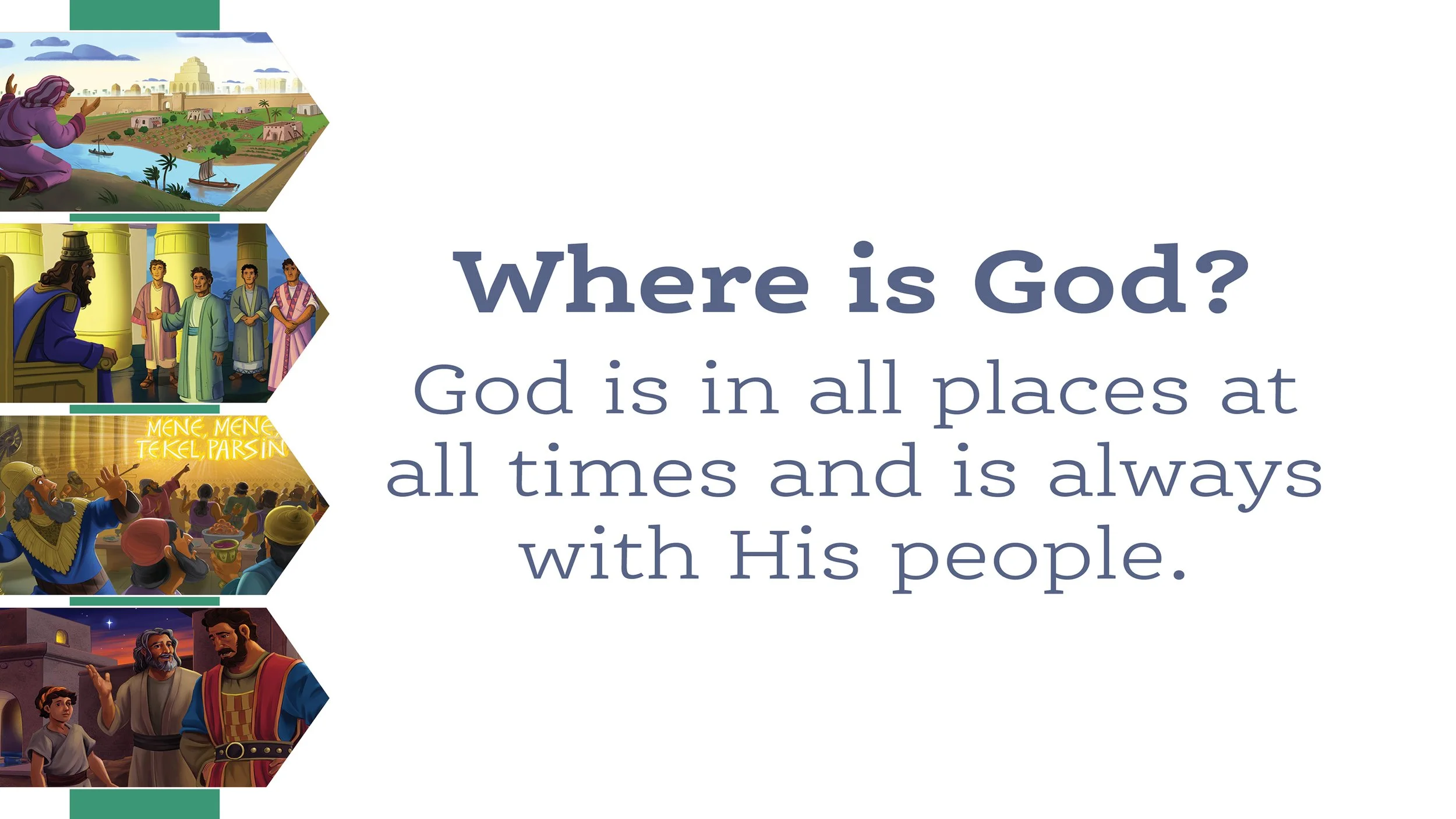
Where is God? God is in all places at all times and is always with His people.
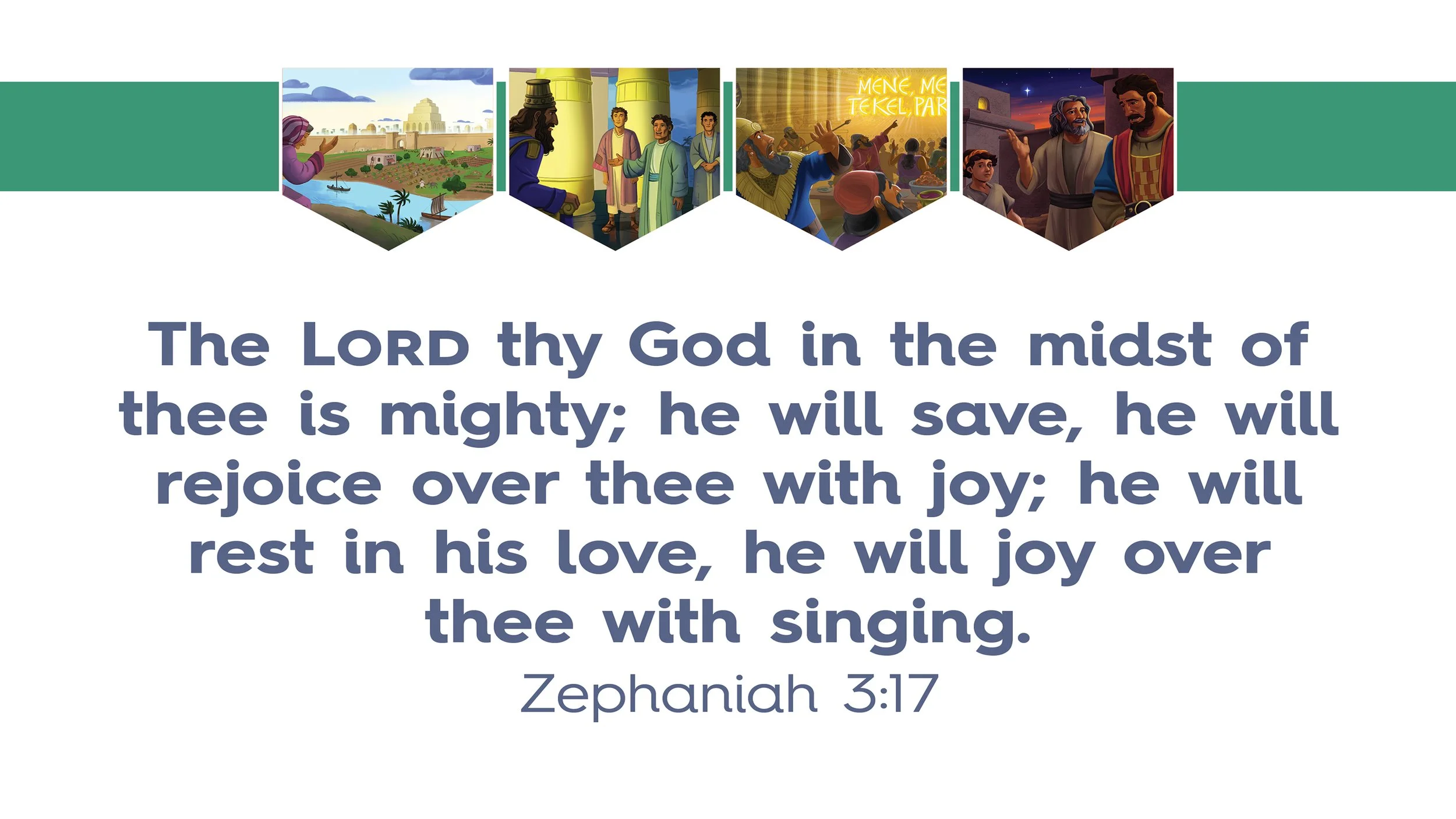
Key Passage: Zephaniah 3:17
March 5 - Session 1: Jeremiah Encouraged God’s People (Jeremiah 29-30)
March 12 - Session 2: Daniel Was Faithful (Daniel 1)
March 19 - Session 3: Daniel Served God (Daniel 5)
March 26 - Session 4: God is Present with Us (Isaiah 7)
Easter Lessons
April 2 - Triumphal Entry/The Last Supper
April 9 - Crucifixion & Resurrection
April 16 - The Emmaus Disciples
April 23 - Jesus Ascension
Unit 17: The People Return
God’s time of disciplining His people had been completed, and true to His word, He returned them to the land of promise. Once there, they began to rebuild the temple—the important reminder that God was with them, that He is faithful, and that He can always be trusted.
Can God be trusted? Yes, God cannot lie or ever be wrong, so we can trust whatever He has said.
Key Passage: Jeremiah 17:7
April 30 - Session 1: God Delivered His People (Ezra 1) - Graduation Sunday
May 7 - Session 2: Zechariah Gave Hope (Zechariah 13-14)
May 14 - Session 3: The People Rebuilt the Temple (Ezra 2-6)
May 21 - Session 4: God Can Always Be Trusted (Jeremiah 31)
Unit 18: The People Prepare
God had made good on His promise to bring the people back into the land, but they were still waiting on another promise: for God to send the ultimate Rescuer. God’s people began to prepare for the Messiah’s arrival, but even so, as always, they couldn’t escape the allure of sin.
How should we feel when we sin? When we sin, we should feel sorry that we have disobeyed God and want to turn from our sin because we love Him.
Key Passage: 2 Corinthians 7:10
May 28 - Session 1: Esther Saved Her People (Esther)
June 4 - Session 2: Nehemiah Rebuilt the Walls
June 11 - Session 3: Ezra Read the Law (Ezra 7-10; Nehemiah 8)
June 18 - Session 4: The People Promised to be Faithful (Nehemiah 9-10)
June 25 - Session 5: We Should Be Sorry for Sin (Romans 8)
Morningside Kids 2/19/23 - God's People Were Taken Captive

Throughout 2 Chronicles 36, it is easy to see that God is the one who raises up and removes kings and rulers and all who are in authority. But this reality can sometimes shake us in profound ways. It may cause us to ask why. This question is fair considering that we often see rulers who don’t love God making decisions that display their lack of belief in God, and it is hard to imagine that God is the One who placed them in leadership.
Why would God allow bad leaders to be in charge? This is a tough question, but Scripture speaks to it in several ways. For one, Romans 13:1-2 remind us to submit to those in authority since they are instituted by God himself. Therefore, to resist authority is to oppose the commands of God, so long as the authority doesn’t demand disobedience to God.
Another place we see this principle play out in Scripture is with Daniel. We find Daniel rebelling against the king’s demand to worship something other than God. But we also find Daniel willfully subjecting himself to the king’s leadership in other circumstances that do not demand his disobedience. Further, we find Daniel actually praying to God and confessing that He is the One who changes brings about the rise and fall of leaders.
Daniel 2:21 says, “He changes the times and seasons; he removes kings and establishes kings. He gives wisdom to the wise and knowledge to those who have understanding.”
The Bible teaches us that God stands sovereign over all things, even the rise and fall of leaders. That includes the most godly of leaders and even those that are most opposed to the things of God. The Lord, in His good purposes may be seeking to wake us up, bring consequence, or refine His people, but His purposes are always good.
God is always working in all times and seasons. And though we may wonder about His purposes in certain circumstances, we can trust that they are always ultimately for His glory and our good, even when that is hard to understand or believe.



Morningside Kids 2/12/23 - Nahum Warned of God's Judgment

Our hyper-vigilant culture is full of warnings: warnings of what will happen if you take certain medicines, warnings not to use forbidden words in particular places, authoritative warnings against actions deemed inappropriate or illegal, and many more.
Though at times these warnings may feel harsh, unnecessary, or far too limiting, they exist to guide people to right decisions that are often best for them and the people around them.
The same is true with the warnings we find in the Bible, both those directed toward people in a particular place at a particular time and those generally made for all readers of all times. They exist as God’s reminder to us of what is ultimately for our good.
The warnings of Nahum fit this bill as well. These warnings come as stern and even harsh language through the prophet, intended to wake up a group of spiritually sleepy people who had again turned to their wicked ways. Nahum warned of a coming judgment and painful punishment. He warned of devastation and destruction as a consequence for sin.
Yet, these warnings stood as God’s gracious gift to rebellious people. Through the prophet Nahum, God told these people of His holiness, their sin, His pending consequences, and the urgency with which they ought to take heed to these warnings.
I can imagine that these people could have received these in much the same way that we often receive warnings today: frustrations with the limitations, severity, and apparent inconvenience they present; however, as we see throughout the pages of Scripture, these warnings serve as an invitation to people far from God to turn to Him for hope, joy, and peace that can only be found by His grace.
The next time you read the warnings of Scripture, celebrate the hope they bring as they demonstrate His good grace to show us a better way, the way to Him. Remember, God doesn’t desire devastation but true repentance that results in ultimate deliverance.



Morningside Kids 2/5/23 - Jonah Warned of God's Judgment

JONAH WARNED OF GOD’S JUDGMENT (JONAH)
If we spend time contemplating what it means to belong to Jesus, the reality is a mystery. How can we who are sinners be forgiven and redeemed? The more we recognize the depth and darkness of our own sin, the greater we understand the magnitude of God’s gift to us: Through His Son, He reached down to display His great love and mercy. Because of Jesus’ wounds, we can have full and forever forgiveness.
The Book of Jonah demonstrates this powerful truth on at least two occasions. One is highlighted in Jonah’s prayer in the midst of his desperation. After running from God and being hurled into the sea, fully expecting to die at the bottom of the ocean, Jonah is swept up and swallowed by a great fish. It is from there that he cries out, “I called to the LORD in my distress, and he answered me” (Jonah 2:2). Jonah, knowing the extent of his own sin and the issue of his own disobedience, cries out in desperation to the Father and finds great comfort in a loving God receiving His desperate plea.
Later, in Jonah 3, we find a similar movement of God’s reaching down and bringing about repentance among the people of Nineveh. In His grace, He relented from the looming punishment they deserved in light of their change of heart.
In both instances, the mercy and grace of God to withhold punishment due to vile sinners brought hope, and this hope ought to be ours today as well.
Isaiah 59:1 says, “Indeed, the LORD’s arm is not too weak to save, and his ear is not too deaf to hear.”
Though much has changed in our world since Jonah’s day, the Lord has not changed. He is not too weak nor too distant to save. No matter how far you or someone you know has strayed, no matter how distant the Lord might feel, His arm is not too short to save. His love can reach down to even the darkest and vilest of all sinners. Praise be to God.



Morningside Kids 1/29/23 - We are to Repent of Sin

WE ARE TO REPENT OF SIN (MATTHEW 3)
The popularity of true crime shows reveals something interesting about people. Whether it be a television show, a streaming series, or a podcast, audiences love a good thrilling episode that takes you on a journey from the mind-captivating details of a crime, through the exploration of the evidence, to the identification of a suspect, and concluding with the resolution of who did it, how they did it, and whether or not they are found guilty.
One shared characteristic between each story is this: there is no case if there is no evidence. Evidence is everything to making a determination about a suspect and building a case.
When it comes to repentance, we understand from this biblical word and its contexts throughout Scripture that it requires both an internal and external turning from sin and movement toward God. Repentance is something that takes place inside someone’s heart and mind while also bringing visible evidence of sorrow about sin and the desire to change.
Matthew 3 contains a subtle but direct indication that true repentance always produces evidence of change. Matthew 3:10 says, “Therefore, every tree that doesn’t produce good fruit will be cut down and thrown into the fire.”
Just two verses earlier, Matthew warned the Pharisees and Sadducees to produce fruit consistent with repentance. And all of this seems to indicate that there is something that happens in the life of someone who is repentant that is visible to those around him. Where there is true repentance, there is always evidence.
We cannot see the thoughts and intentions of the heart; however, we can look for evidence of repentance. What begins in the heart will certainly impact the life of the believer. When this happens, it becomes visible that change has occurred.
Take time this week to ask the hard question of whether or not there is fruit, or evidence, of repentance in your own life. Has the change of heart that repentance begins led to visible change in your life? If so, find great confidence in the grace of God that led you to repentance. And if not, ask the Lord to help you understand why.

